
Medicine / General Medicine
Daily Medicine & Health Radar: What Changes Care—and What Still Doesn’t
Storm-damaged services in Brazil, two U.S. rare-disease approvals and clinical trials that call for a careful distinction between favorable findings and established benefit.

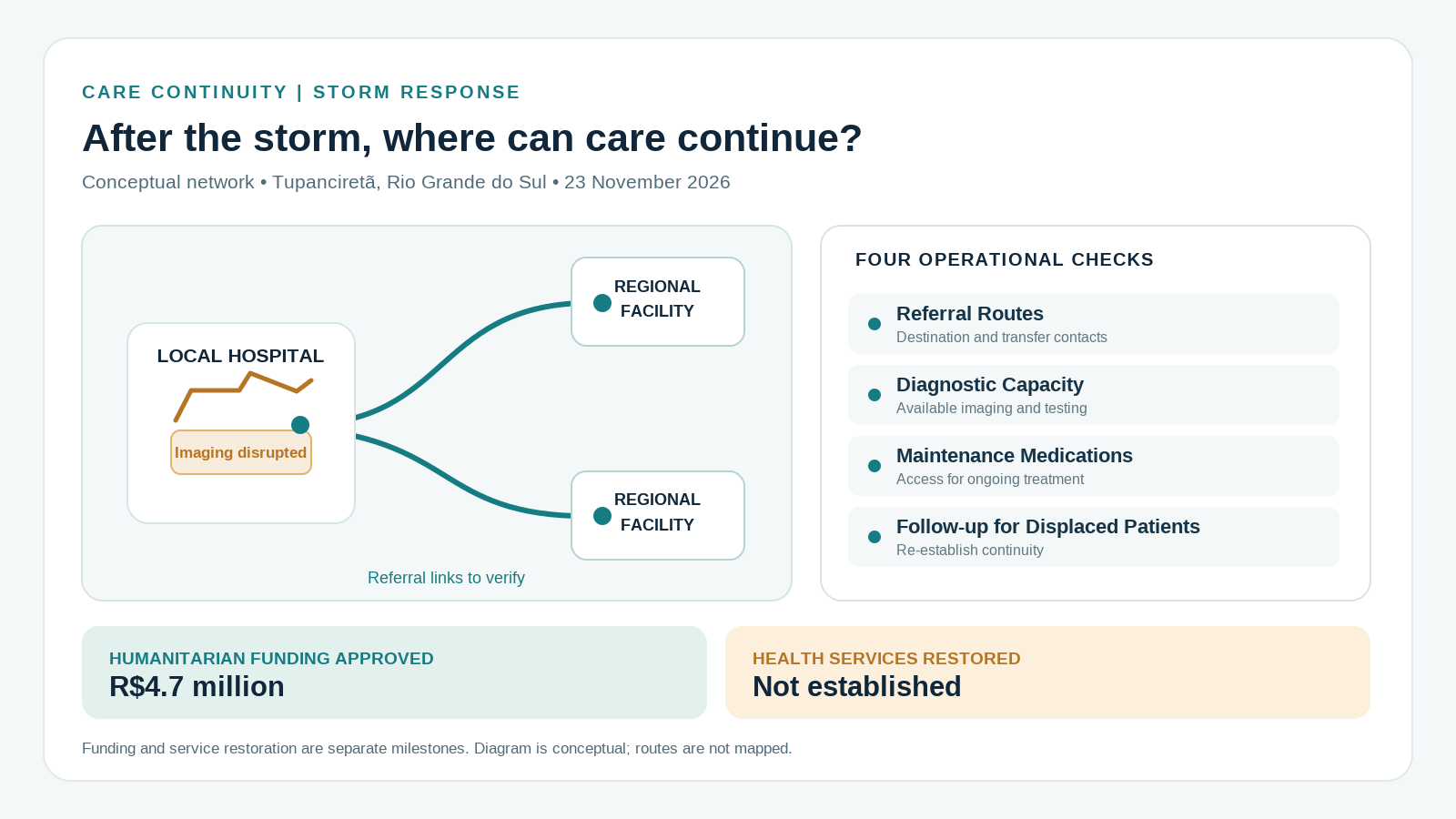
The hospital in Tupanciretã lost part of its roof and diagnostic imaging capacity during a severe storm. Federal humanitarian funding was approved, and regional services were organizing referrals. For patients, the immediate question is more concrete than the funding headline: where can they get imaging, prescriptions and follow-up while local services are disrupted?
That distinction between an announced response and a functioning service runs through this edition. Two trials report favorable results, but ask narrower questions than a headline might suggest. Two rare-disease drugs gained U.S. approval, each with meaningful limits to the evidence and safety requirements. A stem-cell culture study improved experimental reconstitution, while leaving a crucial step unresolved.
Reporting window: November 22, 7:05 a.m., to November 23, 7:04 a.m. (São Paulo time). The two FDA decisions from November 17–18 are included as developments carried forward from the previous week. A separately identified update from the afternoon of November 23 appears below. This is a selected review, not an exhaustive scan of medicine.
What matters today
- Storm response in Rio Grande do Sul: R$4.7 million in federal humanitarian assistance was approved for Tupanciretã. Hospital damage and disrupted imaging were documented; full restoration of health services had not been established in the reviewed material.
- Additional state response: A November 23 state announcement earmarked R$5.92 million for recovery of the health network and described temporary arrangements for a damaged mental-health service. This is a separate allocation from the federal humanitarian plan.
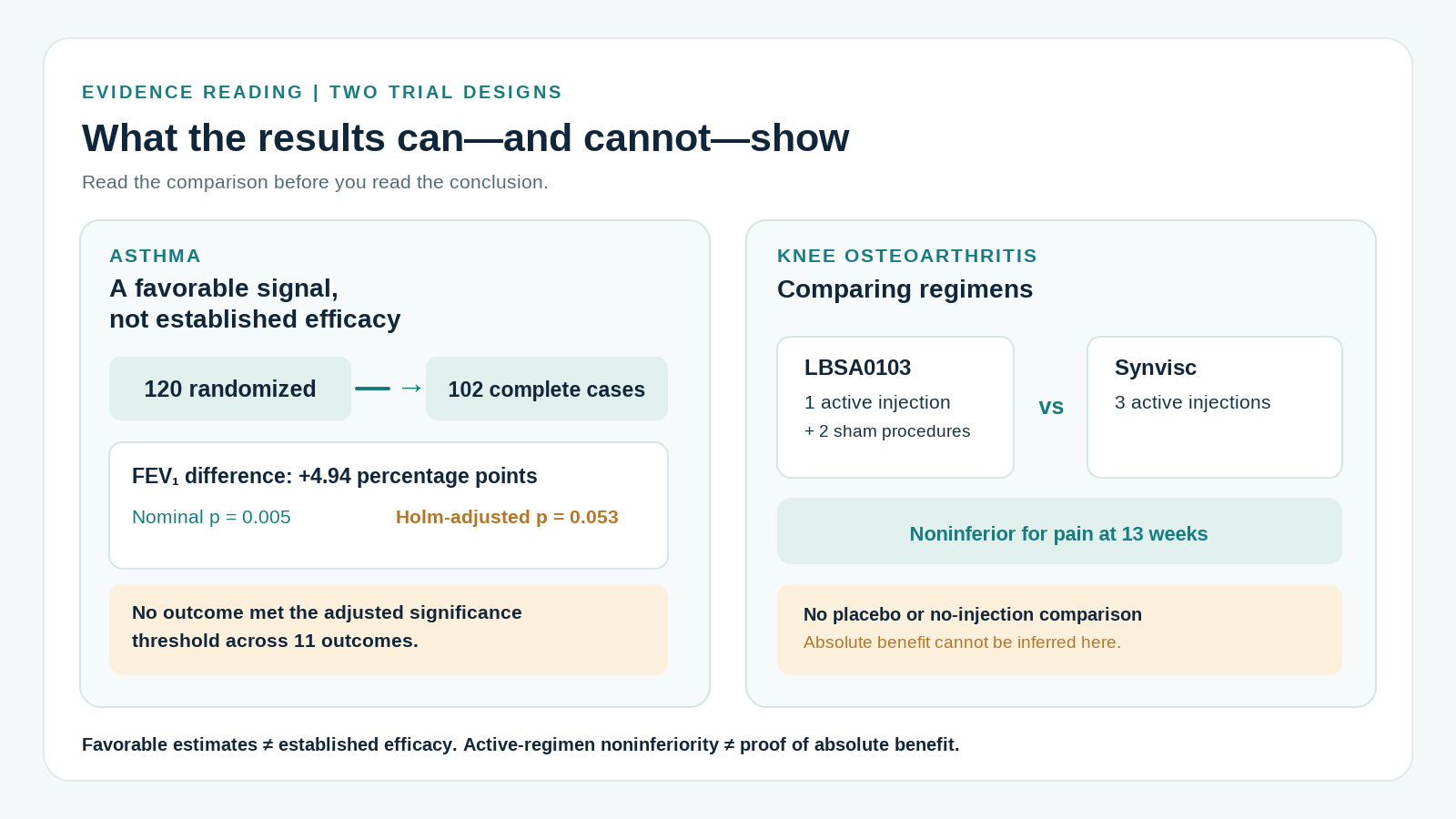
- Asthma recovery: Inspiratory muscle training produced favorable short-term estimates after an exacerbation, but none of 11 tested outcomes met the investigators’ post hoc Holm-adjusted significance threshold.
- Knee osteoarthritis: One injection of LBSA0103 was noninferior to three Synvisc injections for pain at 13 weeks. The trial had no placebo or no-injection arm.
- Rare diseases: U.S. regulators approved adrabetadex for a defined Niemann-Pick type C population and venglustat for neurological manifestations of Gaucher disease type 3. U.S. approval does not answer the question of access in Brazil.
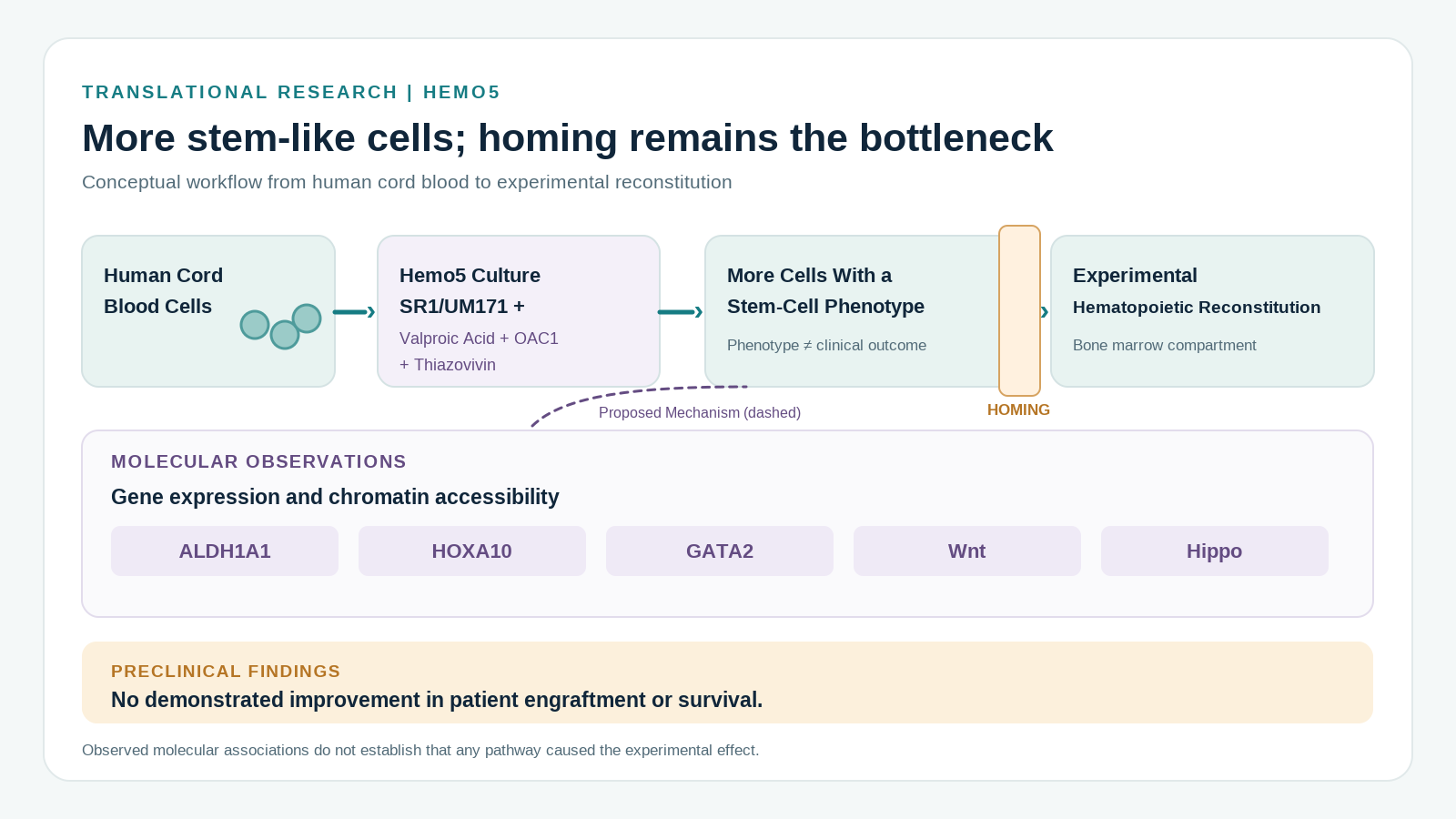
- Transplantation research: Hemo5 expanded cord-blood cells with a stem-cell phenotype and improved experimental reconstitution. Bone-marrow homing and patient outcomes remain open questions.
When the local hospital is damaged, continuity becomes the clinical endpoint
A federal account of the storm response reported approval of the first R$4.7 million humanitarian plan for Tupanciretã on November 22. The plan covered essentials such as food, hygiene supplies, temporary household items, vehicles and fuel. Separate plans for roofing materials and urban cleanup were still being developed. The approval should not be described as money already spent on hospital reconstruction.
The Ministry of Health reported damage to Hospital de Caridade Brasilina Terra, including disrupted X-ray and ultrasound services, and assessment of affected primary-care units. Health authorities were coordinating referral capacity across nearby municipalities, including Júlio de Castilhos, Santa Maria, Cruz Alta and Ijuí. Some patients had been transferred to other facilities. Assessment, transfer arrangements and recovery of normal local capacity are distinct stages.
What should local teams verify first? The destination for urgent referrals; which diagnostic tests can actually be performed; how people who lost access to their usual supply can continue maintenance medication; and how displaced patients will reconnect with follow-up. These are operational priorities inferred from the damage and response, not measured outcomes of the relief effort.
Afternoon update, November 23: Rio Grande do Sul’s health department announced a separate R$5.92 million commitment, with R$3.4 million directed to the hospital and R$2.5 million to primary care, particularly reorganization of mental-health care. The department reported serious damage to the psychosocial care center (Caps), temporary care arrangements involving a mobile unit and tent, and preparations for mobile care at affected primary-care sites. These steps indicate an active response; they do not establish that the hospital or the entire network is fully restored.
An asthma trial with a signal worth testing again
Breathlessness can persist after an acute asthma exacerbation has stabilized. A single-center randomized trial published November 23 tested whether six weeks of supervised inspiratory muscle training added to usual care could improve recovery in adults with moderate asthma.
The investigators randomized 120 people and analyzed 102 complete cases, 51 per group. The baseline-adjusted between-group difference in FEV₁ was +4.94 percentage points of predicted value in favor of training (95% CI, 1.54–8.34). The nominal p-value was 0.005. After a post hoc Holm adjustment across 11 outcomes, it was 0.053; none of the outcomes met the adjusted significance criterion. The estimated six-minute walk-distance difference was 23.95 meters (95% CI, 7.30–40.61), also a short-term estimate rather than proof of sustained clinical benefit.
Two omissions matter. Sleep quality was a registered primary outcome but could not be analyzed because questionnaire data were inadequate. Maximal inspiratory pressure informed the training load, yet the investigators did not assess changes in inspiratory muscle strength; the proposed mechanism was therefore not directly tested. A single center, missing observations and only 6–8 weeks of follow-up further narrow the conclusion.
This study gives a reason to run a larger, more durable trial. It does not establish routine inspiratory muscle training after an exacerbation, and it does not displace established controller treatment.
One injection versus three: the comparison is the point
In a multicenter, double-blind noninferiority trial published November 22, 265 people with mild to moderate knee osteoarthritis were randomized to one LBSA0103 injection plus two sham procedures or three weekly Synvisc injections. The sham procedures helped preserve blinding; they were not a placebo-treatment arm.
At 13 weeks after the last procedure, mean changes in WOMAC-Likert pain score were −7.33 and −6.76, respectively. The upper limit of the one-sided 97.5% confidence interval remained below the prespecified 1.6-point noninferiority margin. Follow-up continued to 26 weeks, and the authors reported comparable safety profiles without a new safety signal.
A patient and clinician who have already decided to use an injection might care about reducing the number of active injections and visits. But a comparison between two active regimens cannot establish benefit versus placebo, exercise-based care or no injection. Nor does this study, conducted in China, settle the status or suitability of these particular products in Brazil. Its practical conclusion is about relative regimen performance, not a new indication for viscosupplementation.
Two U.S. rare-disease decisions, with different evidence and safety questions
Adrabetadex (Lembaz). On November 17, the FDA approved intrathecal adrabetadex to reduce mortality risk in adults and children weighing at least 7 kg with Niemann-Pick disease type C whose neurological symptoms began before age six. The agency compared survival for 36 treated patients against a matched external-control group. The reported hazard ratio for death was 0.45 (95% CI, 0.21–0.95), with estimated median survival of 102 versus 59 months.
That is an important regulatory signal, but externally selected controls can differ from treated patients in ways matching does not remove. The U.S. prescribing information also carries a boxed warning for hearing impairment, including permanent hearing loss, and calls for audiological evaluation before and during treatment. The evidence and the monitoring burden should be read together.
Venglustat (Infilbray). The FDA approved the oral drug on November 18 for neurological manifestations of Gaucher disease type 3 in adults and children weighing at least 15 kg. Venglustat inhibits glucosylceramide synthase and crosses the blood-brain barrier. Its ability to reach the central nervous system explains the therapeutic rationale; the clinical trial is what tests the patient effect.
In a 52-week randomized trial of 43 people previously stabilized on enzyme replacement therapy, a global test combining neurological measures favored venglustat (p=0.0137). The estimated between-group difference in the RBANS cognitive index was +8.32 points (95% CI, 0.75–15.89). The modified SARA ataxia estimate was −0.49 points (95% CI, −1.29 to 0.32), an imprecise individual result. A positive combined test does not make every neurological component equally certain.
The label describes suicidal ideation and behavior, pediatric lens-opacity concerns, embryo-fetal risk from animal findings and CYP3A drug interactions; it calls for appropriate psychiatric and ophthalmologic assessment. The small trial and lack of participants aged 65 or older restrict generalization. Neither U.S. approval establishes Brazilian registration, commercial availability or incorporation into SUS; those statuses were not verified in this review.
Elsewhere in the literature
- Cord-blood transplantation: Hemo5 increased cells with a primitive hematopoietic phenotype, colony output and experimental multilineage reconstitution compared with SR1/UM171 culture conditions. Homing to marrow remained an obstacle. These are preclinical findings, without a demonstrated patient indication.
- Chemotherapy and distress: A secondary longitudinal analysis of 390 adults aged 50 or older linked worry with sleep, mood and financial difficulties. The associations support looking at these needs together, but do not show which intervention would improve them.
- Cystic fibrosis care: An Australian registry pilot received patient-reported outcomes from 197 of 1,052 invited people. Those accounts matter, while the 18.7% response rate limits comparisons among services.
- Extracorporeal CPR: An international survey collected 186 responses across 41 countries and territories and found variation in anticoagulation practice. It describes practice; it cannot identify the safest regimen.
Why Hemo5’s cell count is only part of the story
The preclinical Hemo5 study, published November 22, added valproic acid, OAC1 and thiazovivin to an SR1/UM171 cord-blood expansion platform. In human cord-blood cells and transplantation experiments, the investigators observed more cells with a stem-cell phenotype, greater colony formation and stronger hematopoietic reconstitution than with the comparison culture.
Gene-expression and chromatin-accessibility analyses pointed to ALDH1A1, HOXA10, GATA2, and Wnt and Hippo signaling. These observations are consistent with an effect on primitive-cell programs, but they do not isolate which molecular change caused which functional result. The transplantation experiments used an experimental system, including intra-femoral delivery; they do not demonstrate a clinical transplant benefit.
The unresolved step is homing: expanded cells must reach and function in bone marrow. A higher count in culture cannot answer that question on its own. No improvement in patient engraftment or survival was shown.
Brazil: forecasts, access and the next check
The Cemaden forecast issued at 3:19 a.m. on November 23 described moderate possibilities of flooding in parts of Paraná, Minas Gerais and Rio de Janeiro, and landslides in listed regions of Paraná and southeastern Brazil. It was a regional forecast, not confirmation that an event occurred at a given address. Local and updated alerts remain decisive for planning.
The Conitec agenda for 9 a.m.–1 p.m. on November 23 included public-consultation contributions on delayed-release risedronate and cabotegravir for HIV-1 pre-exposure prophylaxis, plus an initial assessment of atomoxetine. The agenda establishes what was scheduled for discussion, not what the committee recommended or what SUS incorporated. Meeting outcomes require a separate check.
For clinicians responding to the storm, the immediate practical task is to verify current referral destinations, imaging availability, medication supply and continuity for people whose usual care was disrupted. For readers following the trials, the next useful questions are whether the asthma finding replicates with longer follow-up, whether injection decisions are supported by comparisons against relevant alternatives, and whether Hemo5 can solve marrow homing in a clinically meaningful way.
Editorial scope: This review summarizes selected primary publications and official releases available for the stated reporting window, plus the explicitly dated afternoon update. It does not replace patient assessment, current local alerts, product labeling or applicable clinical guidance. No treatment should be started or stopped on the basis of this article alone.